

Item 1 of 2
 ₹https://old-age-homes.antaraseniorcare.com/care-homes/-in-bengaluru/-in-shanti-nagar/antara-care-home-in-shanti-nagar-bengaluru--1RVgoJ/articles/respite-care-the-complete-senior-care-guide-for-families--36cbab34-375d-4a44-bfea-214865913885
BTS Main RoadShanti Nagar, bengaluru560027in08037220962
1505
Antara Care Home, Shanti Nagar, bengaluru
Premium Old Age Home in Shanti Nagar, Bengaluru, Karnataka - 560027
08037220962
Request A Call Back
Antara Care Home Social Feeds in Shanti Nagar, bengaluru
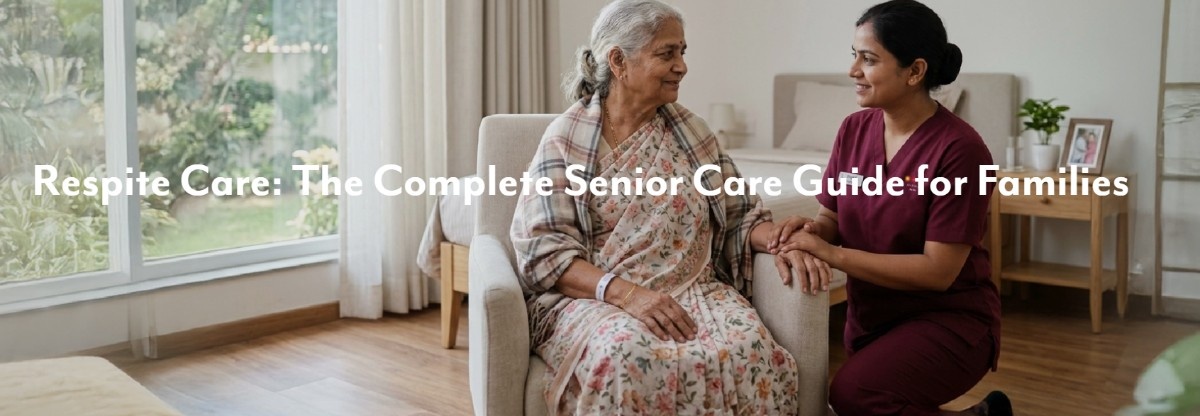
Respite Care: The Complete Senior Care Guide for Families
This is the moment most family caregivers know very well. You haven't had time for yourself or your own doctor's appointment has been rescheduled three times. You can't remember the last time you sat down for dinner without leaving in the middle of it. You love the person you are taking care of deeply and completely but somewhere underneath all of that, you're feeling empty.
Nobody talks about this. The person receiving the care gets all the attention as they should, But the person giving it? They are quietly falling apart and nobody notices until something breaks.
That's the gap respite care is built to fill.
What is Respite Care Meaning?
Let's start with the basics. The word "respite" means a short rest or relief from something difficult. So respite care, at its core, is a temporary care arranged so that the primary caregiver, usually a family member, can take a break, rest and have some time to focus on themselves too.
Respite care makes sure the person receiving care doesn't go without support. They are looked after by a trained professional, either at home, which most people prefer or at a professional care facility, while the usual caregiver steps away for a few hours or even a few days.
That's it. That's the definition. But this is not as simple as we make it sound here as the affect it has on both the person who needs care and the person caring is much more.
Who Needs Respite Care?
The Short answer: More families than actually realise.
Respite Care is necessary for any situation where one person is taking care of another. This could be an adult child looking after an elderly parent with dementia. A wife caring for her partner after a stroke. Being a parent and raising a child with a minor or major disability. Anyone who is primarily taking care of someone who cannot fully take care of themselves.
Some specific situations where families reach out for respite care:
Caregiver burnout — When exhaustion, stress, and isolation have been piling up for months. The caregiver needs proper rest and not just for a few hours.
Scheduled breaks — A family event, a holiday, a medical procedure of their own. Something that requires the caregiver to step away for some time.
Post-hospitalisation recovery — When a senior just came home after a surgery, a stroke, or a serious illness and needs more intensive support than the family can provide alone.
Trial period before long-term care — Some families use respite care as a way to try out home care professional services before committing to it permanently.
High nursing dependency — When the care needed has crossed what any family member can realistically provide like frequent medication, wound care, catheter handling, tube feeding, these clinical demands require trained nursing hands.
Dementia care — Caring for someone with dementia is a different story. Behavioural changes, nighttime wandering, confusion, and the emotional weight of watching someone lose themselves, these are not things one person should carry without relief. Respite care staffed by dementia-trained professionals gives the patient a safe environment.
Chronic illness support — When a family member is managing a long-term condition like Parkinson's, COPD, or heart failure, the caregiving never ends. There is no finish line. In these situations, respite care isn't crisis management, it becomes recurring and necessary.
How Does Respite Care Work?
It's much more flexible than most people assume it to be.
It’s never compulsory to commit to a long-term program. You don't have to move your loved one somewhere unfamiliar if you don't want to.
Here's how the process typically works, step by step:
Assessment Everything starts here. A care coordinator meets with the family and the person requiring care to gather information about medical history, daily routines, mobility, cognitive function, dietary needs, and preferences. It's the foundation everything else is built on. A good assessment is what separates generic care from care that actually fits the person.
Care Plan Based on the assessment, a personalised care plan is put together. This outlines what kind of support is needed, who provides it, what the daily schedule will look like and what to do if something unexpected happens.
Duration Selection This is where you decide: a few hours while you're busy with something? A few days while traveling? Two weeks while recovering from surgery? Everyday 9 to 5 while you work? Choosing the duration is the primary step and everything else comes after that.
Care Delivery Once the plan is agreed and the duration set, care begins as per the agreed schedule. The goal is that the person receiving care notices as little disruption as possible, same medications, same routines, same level of support, just a different face for a while.
Monitoring Care doesn't run on autopilot. Good respite care providers maintain active monitoring throughout, tracking health, flagging changes in condition, and keeping the primary caregiver informed. You will receive regular updates.
Types of Respite Care
There isn't just one plan that fits all. Different situations call for different programs.
In Home Respite Care A trained professional comes to the family home. The patient stays in their own environment, their own bed, their own routines, their own belongings and the professional handles the day-to-day responsibilities and helps in the tasks needed.
Adult Day Care Programs The senior goes to a day care centre for a few hours usually during the working hours and returns home in the evening. These centres offer social activities, meals, sometimes light medical supervision, and a chance for the seniors to interact with new people. For the person taking care who also works a 9 to 5 job or needs daytime hours free, this is often the most useful option.
Home Respite Care (Short-Stay Residential) The patient stays at a post operative care
facility for a defined period could be a few days or a few weeks. They receive round-the-clock care, meals, medical support, and structured activities designed as per their needs to improve their mobility or mental health.
Emergency Respite Care Unplanned, usually at a short notice when the caregiver suddenly can't be there. Not every provider offers this, but it's worth identifying ones that do in advance, if any unforeseen event occurs.
Hospice Respite Care For families caring for someone at the end of their life. Hospice care teams temporarily take over so the family can rest during this difficult time for them.
How to Choose the Right Rehabilitation Center for Respite Care
This is where families get confused as there are a lot of options..
A few things to actually look for:
Trained, qualified staff — Usually for elder care, dementia care, and if any particular medical needs a person has. Ask directly: who will be taking care of my loved one and their training and qualification.
Staff-to-patient ratio — this tells you more about care quality than almost anything else. A low ratio means attention is split and smaller things get missed. Ask what the ratio is during the day and at night. Night staffing is where some centres cut corners.
24×7 supervision — for seniors with significant medical needs or dementia, care cannot have gaps. Staff should be present and active at all hours, not just on call.
Emergency readiness — what happens if the resident falls or a medical emergency at 2 AM? A reliable care home has clear protocols, trained first responders on staff, and a relationship with a nearby hospital.
Structured care plan — every resident should have an individual plan and not a generic routine. It should be reviewed regularly, shared with the family, and updated if the person's condition changes.
Clear communication — a good facility gives regular updates. You should never feel out of the loop on what's happening.
Trial visits — the best centres welcome a visit before commitment.
Facilities like Antara Care Homes combine structured care delivery, trained nursing teams, and a safe environment designed for both short-term recovery and planned breaks for the care giver. The care model addresses physical needs, emotional wellbeing, and social engagement together, which determines how comfortable a resident is during their stay.
How Long Can Someone Stay in Respite Care?
This is one of the most common questions and there is no definite answer to this.
In-home respite care can be as short as a two-hour visit. Residential stays are usually for a few days, with most facilities having a minimum of 3 to 7 days program for a short-stay admission. On the upper end, a respite stay can last several weeks, some facilities even allow up to 30 or even 60 days depending on the availability and the patient’s need.
Some families use respite care on a regular and recurring basis, every few months, or one week every quarter, rather than waiting until a serious crisis begins. That approach tends to work better for everyone involved.
Average Cost of Respite Care
Costs vary depending on the type of care needed, the location, and the level of medical support and supervision involved.
In India, in-home respite care from a professional typically runs ₹1500 to ₹2,500 per day for basic companionship and personal care, rising significantly if nursing-level medical support is needed.
Adult day care centres, where they're available, generally range from ₹2000 to ₹3500 per day including meals and activities.
Residential short-stay care at a facility like Antara Care Homes would be a worthy and wise investment for families who have been managing everything themselves for months, the cost of a proper break tends to look very different once you weigh it against the caregiver’s burnout.
Respite Care at Home vs Care Home Respite Care
Both have their pros and cons. The right choice depends on both the person being cared for and what the person taking care actually needs.
In-home respite care is better when the senior is particularly attached to their environment, has mild needs, or struggles with change. It's also usually less expensive and easier to get started with. The downside is that it feels less like a real break for the caregiver, especially if they're still at home.
Home care respite The senior gets access to a team of professionals, structured activities, and social interactions. This transition takes a little adjustment, especially for the first day or two. But most families report that their loved one feels much better.
Common Myths About Respite Care
"It means I'm abandoning them." No. It means you're making sure they are looked after by someone who is professionally trained to do so, while you take some time off and rest.
"They won't settle anywhere else." Some seniors take a little time to adjust. But most feel comfortable within 24 to 48 hours, especially in a happy environment with trained staff who knows how to handle every situation.
"It's only for people who are really struggling." Respite care works best when it's used before the crisis hits you.
"It'll be too expensive." It can be sometimes, if you only look at the cost alone. But what’s the alternative: a person taking care develops a health crisis of their own.
Why Respite Care is Important for Modern Families
Indian families have changed a lot in the past few decades, Nuclear families are more common today. The joint family system that once meant taking care was naturally shared across multiple people is rare in most scenarios at least in tier 1 and tier 2 cities.
What that means in practice is that caregiving falls harder and on fewer shoulders. One person ends up carrying what used to be distributed across many.
Respite care isn't just a Western concept anymore that doesn't apply to us. It is the need of the hour.
You're not failing. You're a human too at the end of the day.
Conclusion
Respite care exists because taking care can be hard and in most cases harder than a full time job. Because it's relentless. Because the people who do it most selflessly are the ones least likely to ask for anything in return and most likely to suffer quietly and in guilt until they can't go on.
If you're a family caregiver, the most important thing in this entire article is this: a break is not a luxury. It is part of the healing process.
Look into your options. Visit a centre like Antara Care Homes. Ask the questions you're nervous to ask. And then let yourself rest properly, without guilt.
Frequently Asked Questions
1. What is the exact meaning of respite care?
Respite care is temporary care provided by trained professionals for a dependent person.
2. Who qualifies for respite care?
Anyone who is the primary caregiver for a family member and needs temporary relief. There's no formal eligibility criteria in most private arrangements.
3. How is in-home respite care different from a care home?
In-home respite care brings a trained professional to your house so the person receiving care stays in their familiar environment.
4. How much does respite care cost in India?
In-home respite care typically costs ₹1500 to ₹3,500 per day for basic care, more if nursing-level support is needed. Residential short stays vary by facility, duration, and medical requirements. Some insurance plans offer partial coverage.
5. How long can someone stay in respite care?
Stays range from a few hours for in-home visits to several weeks at a residential facility. Most families use residential respite care for between 3 days and 2 weeks. Some facilities allow stays of up to 30 to 60 days for longer recovery needs.
6. Is respite care only for elderly people?
No. While commonly associated with senior care, respite care is also used for adults or children with disabilities, and anyone who needs ongoing support in daily life or recovery from a medical episode.
7. Can someone with dementia go into respite care?
Yes, and it's often especially beneficial. Many residential facilities have dedicated dementia care wings with trained staff.
8. What should I look for in a respite care facility?
Trained staff, a transparent pre-admission assessment, a documented care plan, clear communication, a good staff-to-patient ratio, 24×7 supervision, and emergency readiness protocols. Always visit before committing.
9. Will my loved one feel abandoned if I use respite care?
Most people adapt faster than their family expected. A well-run facility quickly becomes a comfortable and even stimulating environment.
10. How do I set up respite care for the first time?
Identify what you need, how long, what level of care, in-home or residential. Contact a provider like Antara Care Homes for an initial consultation. They will assess your loved one's needs, walk you through available options, and help build a care plan.