
Item 1 of 2
 ₹https://old-age-homes.antaraseniorcare.com/care-homes/-in-chennai/-in-thandalam/antara-care-home-in-thandalam-chennai--3i4epD/articles/how-assisted-living-supports-independence-while-ensuring-daily-care-for-seniors--e77fb347-31b3-459c-8b4a-1f4ae16b2f23
Vanigar StreetThandalam, chennai600128in08037220962
1505
Antara Care Home, Thandalam, chennai
Premium Old Age Home in Thandalam, Chennai, Tamil Nadu - 600128
08037220962
Request A Call Back
Antara Care Home Social Feeds in Thandalam, chennai
How Assisted Living Supports Independence While Ensuring Daily Care for Seniors
Summary: Modern assisted living in India is transforming from a “crisis backup” into a proactive strategy for active longevity. By combining clinical safety with geriatric-led architecture and peer social networks, these environments restore independence rather than limiting it. This guide explores how structured support empowers seniors to live with dignity and safety in 2026.
One of the most difficult conversations families have today is about “help.” Parents often fear losing independence, while adult children fear a medical crisis. Somewhere between these two concerns lies assisted living a concept often misunderstood in the Indian context.
Historically, families associated independence with living alone. However, as longevity increases, this binary no longer holds. In 2026, assisted living is recognized as a middle path that allows seniors to remain in control of their lives while receiving support where it truly matters. Understanding this balance is essential for making the right decision at the right time.
The Independence Myth vs. Modern Reality
Many parents equate independence by doing everything themselves, even when tasks like managing a home become exhausting. However, unmanaged independence often leads to catastrophic dependence later. A sudden fall or prolonged isolation can rapidly accelerate decline.
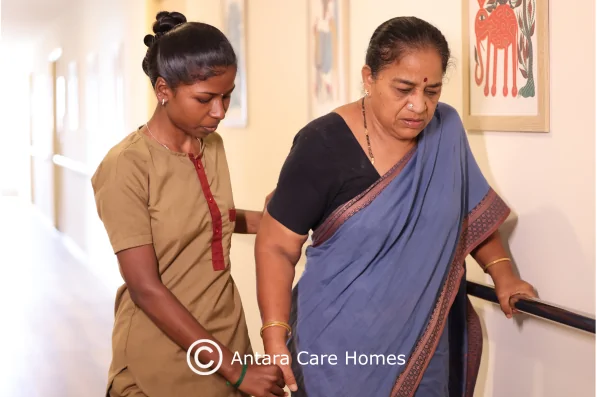
Assisted living environments redefine independence. It is no longer about doing everything alone; it is about living on your own terms with a robust safety net. In a professional assisted living setup, seniors do not hand over control. Instead, they receive “selective support” help with bathing, dressing, or medication—which frees their energy for hobbies and social connection.
Assisted Facilities as Enablers
One common fear is that assisted facilities are restrictive. In reality, high-quality centers operate on the principle of enablement. Instead of waiting for a crisis, these environments quietly monitor health trends. Using 2026 geriatric technology, staff can track gait changes or sleep patterns to intervene early. This prevents the abrupt loss of autonomy that usually follows emergency hospitalizations.
Why “Living Alone” Becomes Risky
Data from India’s Longitudinal Ageing Study (LASI) reveals that nearly 40% of urban seniors live alone, many managing chronic conditions without supervision. While they may cope well initially, the risks increase with age:
- Physical Safety: Falls account for 50% of injury-related hospitalizations among Indian seniors.
- Medical Errors: Medication mismanagement affects nearly 25% of elders living alone.
- The “Golden Hour”: In a standard home, emergency response depends on neighbors. In an assisted living residence, help is available within seconds.
Old Age Homes vs. Assisted Living
The distinction between traditional old age homes and modern assisted living is vital. Traditional homes often focused on basic shelter. Modern assisted living homes focus on preventative wellness. The difference lies in agency: residents have access to physiotherapy, cognitive workshops, and nutritionists, allowing them to live actively rather than simply “being looked after.”
Architecture: The Silent Supporter
We often overlook how a standard house “disables” a senior. High bathtubs, dark hallways, and slippery floors are obstacles to autonomy. Assisted living architecture uses “Universal Design” to help residents do more on their own.
According to WHO age-friendly guidelines, seniors in adapted environments retain mobility significantly longer. Features like anti-skid flooring, intuitive grab bars, and barrier-free layouts act as “independence tools.” By removing physical barriers, these homes restore a senior’s ability to navigate their world without asking for help.
The Power of Routine and Social Connection
In assisted living homes, routine is gently reinforced to improve sleep, movement, and cognitive health. This consistency restores a sense of control.
More importantly, these environments combat the invisible epidemic of loneliness. Research in The Lancet Healthy Longevity links social isolation to a 50% increased risk of dementia. By providing peer communities, assisted facilities restore “Social Independence.” New friendships reduce emotional reliance on children, creating a healthier family dynamic.
Searching for “Assisted Living Residence Near Me”
When families search for an assisted living residence near me, they are seeking reassurance. While proximity is important for visits, the true value lies in the “Clinical Buffer.” Premium setups in India now provide:
- 24/7 Nursing: Immediate medical triage.
- Hospital Tie-ups: Priority admission for emergencies.
- Metabolic Management: Specialized diets for India’s high diabetic and cardiac populations.
Reducing Caregiver Burnout
For adult children especially the “Sandwich Generation” caregiving is often a high-stress second job. By shifting daily logistics to assisted facilities, the child returns to being a child, and the parent returns to being a parent. Visits focus on emotional connection rather than medication checklists. Studies on urban Indian caregivers show that professional elder care significantly improves the mental health of the entire family.
Independence Through Choice
The ultimate benefit of assisted living is choice. Seniors decide when to wake up, what activities to join, and how much help they want. Support is present but never forced. This preserves dignity and self-worth two elements often lost when aging alone becomes a struggle for survival.
Acting early allows seniors to adapt gradually to their new community. You can easily understand how assisted living facilities work by reading, or better you can visit these facilities. It ensures they are making the transition while they still have the vitality to enjoy the amenities and build new social ties.
Final Thoughts: Redefining the Golden Years
Independence does not disappear when support enters the picture; it is often fortified. Assisted living works because it removes the “randomness” of aging. It provides a predictable, safe, and social environment where medical help is a button-press away.
For families navigating the modern Indian context, choosing assisted living is not about giving up control. It is about choosing stability, dignity, and continuity for the years that matter most.
About the Author: Antara Care Homes is a leader in the Indian senior care sector. By specializing in assisted living homes and assisted facilities, Antara provides a clinical-first approach that prioritizes senior dignity and family peace of mind.